Historical Magical Font
Choosing the right font for a project can feel like selecting the perfect accessory for an outfit—subtle, yet essential. When I was redesigning the header for a lifestyle blog focused on vintage-inspired living, I found myself drawn to Historical Magical, a handwritten script font that felt both timeless and modern.
A Handwritten Script with Character
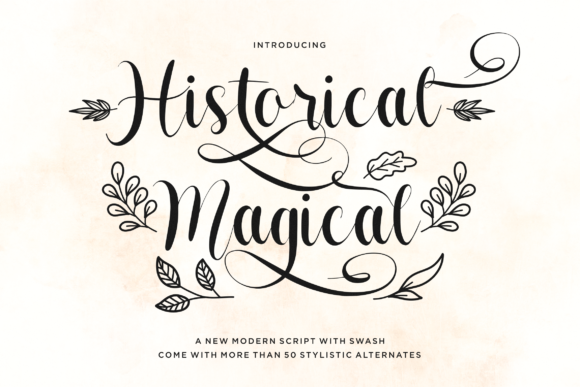
Historical Magical is more than just a font; it’s a typeface with personality. Its flowing strokes and soft flourishes evoke a sense of nostalgia, making it ideal for projects that aim to feel personal and authentic. The rhythm of the letters creates a natural cadence that feels easy on the eye, even when used in larger sizes for headlines or cover text.
What stands out about this font is its versatility. It works well in both digital and print formats, maintaining clarity and charm whether displayed on a screen or printed on paper. The PUA encoding ensures that all characters are accessible without requiring special software, which is a practical consideration for designers working across different platforms.
Applications in Editorial Design
I tested Historical Magical in a few real-world scenarios. For a recipe ebook, I used it for chapter openers and section headings. The font added a warm, inviting tone that complemented the cozy, home-cooked feel of the content. It also worked well as a pull quote in an editorial feature page, drawing attention without overwhelming the surrounding text.
In a coaching workbook, I paired it with a clean sans serif font for body copy. This combination created a balanced visual hierarchy, allowing the handwritten elements to stand out while keeping the rest of the text readable. The contrast between the expressive script and the structured sans serif enhanced the overall design without feeling jarring.
Readability and Practical Use
While Historical Magical excels in display roles, it’s important to consider where it fits best. Due to its expressive nature, it’s not ideal for long paragraphs or small captions. However, when used thoughtfully, it can elevate a design without sacrificing legibility.
For a printable planner, I used the font for title pages and motivational quotes. The soft curves and elegant lines gave the pages a refined look that felt intentional. In a newsletter graphic, it served as a decorative accent, adding a touch of personality to the layout without competing with the main content.
Pairing and Brand Identity
When working on a digital magazine layout, I experimented with pairing Historical Magical with a classic serif font for body text. The result was a cohesive and professional look that maintained the font’s charm while ensuring readability. This pairing also helped reinforce the publication’s brand identity, creating a visual language that felt consistent and polished.
For a wedding guide, I used the font for section headers and key phrases. Its elegant style aligned perfectly with the theme of the publication, offering a subtle yet impactful way to highlight important information. The font’s ability to convey warmth and sophistication made it a fitting choice for the project.
Considerations for Commercial Use
Before incorporating Historical Magical into any project, it’s wise to review the licensing terms. The font includes multiple styles and alternates, which can be useful for creating variation in design work. Its multilingual support makes it a good option for international publications or content that requires diverse language options.
For a course PDF, I used the font for the title and subtitle, ensuring that the design remained visually engaging while maintaining a professional tone. The font’s commercial license allowed me to use it without concern, which is an important factor for creators who sell digital products or offer paid services.
Whether you’re designing a lifestyle blog, a recipe ebook, or a coaching workbook, Historical Magical offers a unique blend of elegance and expressiveness. Its handwritten quality adds a human touch that can make a design feel more personal and approachable. With careful consideration of its strengths and limitations, this script font can become a valuable asset in your design toolkit.